Winters in Korea are harsh. Snow and slush, ice salts, and sub-zero temperatures that constantly leave extremities on the verge of going numb. With all the muck and debris, fenders save the day. They help keep the splatter at bay.
While on a weekend country-road gravel ride outside of Seoul, the rear fender experienced a ductile fatigue failure, splitting cleanly at the bolt mount on the underside of the seat stay bridge. I tried to salvage the broken section since it had the mounting bar and bracket attached. But over the course of the ride it became too cumbersome and was ditched in a garbage can. The half fender was born.
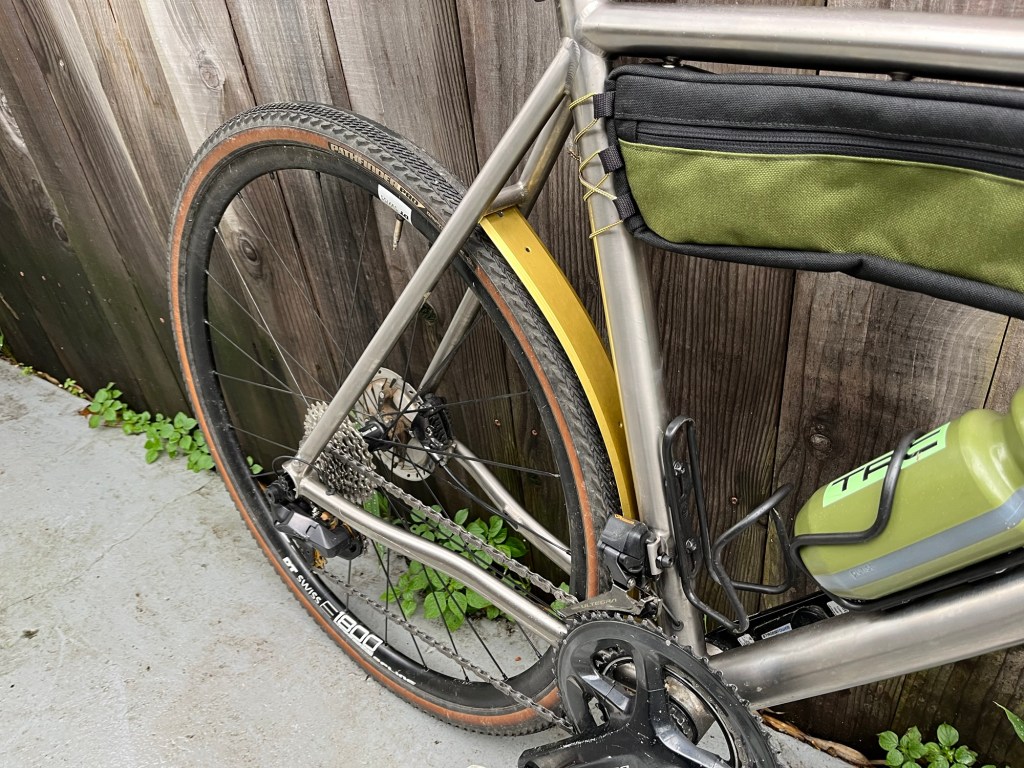
The half fender is easier to mount than a full fender since it only requires two 5mm bolts, one at the chain stay and one at the seat stay bridge. It helps keep the frame cleaner around the bottom bracket and seat tube. Without a fender, this area can easily get dirty with it being so close to the rear wheel. This section is also more difficult to clean with all the small voids around the front derailleur (FD) and if there is a FD clamp.
The half fender doesn’t do a lot in terms of protecting the rider from poopoo splatter and debris, but it does keep the bike cleaner and maintenance down.
Unlike the SKS fender, the gold fender doesn’t have the same cross section to help contain flying debris. The gold fender is just a flat piece of aluminum. This was a repurposed aluminum strip that was originally a doorway seam binder. It is thin and easy to cut and bend, also, gold.
For future or alternative designs, I would consider extending the bottom section of the fender below the seat stay bridge to offer more protection around the bottom bracket.
Disc brakes are great when riding in adverse conditions and offer stronger and more responsive braking control than rim brakes. However, the brake system is more difficult to install, adjust, and harder to maintain. One key aspect of having well working disc brakes is having pistons that articulate smoothly.
Doing a deep cleaning is a sure way to keep the pistons and caliper clean. To this end, a short burst from an air compressor after a ride doesn’t require any disassembly and removes a lot of brake dust, preventing dust buildup and prolonging the time needed before a deep clean.
This second version of the titanium all road build has proven to be a fun, fast ride. The geometry works in such a way that I can ride comfortably and efficiently, in a more tucked aero position if I choose. One area I notice a difference in ride quality compared with the first titanium all road frame is on a climb. When riding just outside of threshold I am able to find a springy rhythm that allows me to keep the pedals turning. The bike also feels very nimble and secure when riding out of the saddle. The front end feels light when sweeping back and forth, responsive, and stiff enough to translate my energy into the forward direction. All of this positive feedback is also noticed when riding on flats but to a lesser degree.
The frame saw some changes compared with the first titanium all road frame, highlighted on the diagram. Some changes that are not highlighted include straight seat stays, a front derailleur mount, and a head tube to accommodate internal routing.
The geometry was adjusted based on my experience with the first all road frame. The top tube was extended and the seat and head tube angles were tightened up. These angle adjustments seemed to pair very well with the enve CX fork that was used.
The frame saw some stiffness upgrades in the form of a larger diameter down tube and a thicker bottom bracket shell.
Lastly, with the bottle cage lowered for easier frame bag access and more tire clearance, this frame leaves little to be desired.
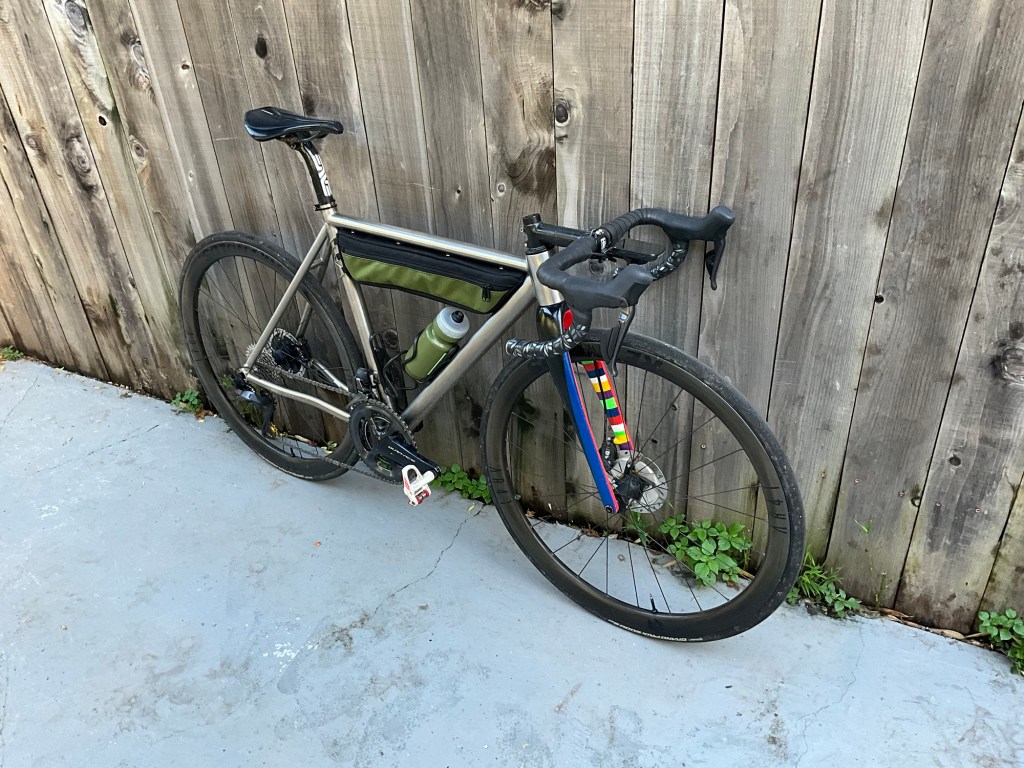
The fork was hand painted, one stripe at a time, in a traditional Korean color scheme called saekdong (색동). This vibrant color pattern is historically associated with cheerful youth who would wear these colors on their traditional hanboks (한복) on special occasions such as lunar new year and thanksgiving (추석). Through the Japanese occupation it also became associated with human rights. Today it is associated with festive Korean events and can be seen in many different versions and forms.
Another upgrade for this build was the new Di2 12 speed Ultegra Group. This version allows for semi-wireless shifting, where the levers do not need to be connected directly to the derailleurs. However, in the hopes of extending the battery life, the shifters were wired directly to the derailleurs.
I had intended on having the wire port on the underside of the chain stay and was amiss when it was on the top. However, its current placement does make for a more natural wire routing curvature.
The rear drop out design has a separate plate that is secured over the thru axle nut. This keeps the thru axle nut attached to the frame making it easier when removing the rear wheel.
Similar to the first version of the all road frame, this frame also has mounts welded to the seat stays.
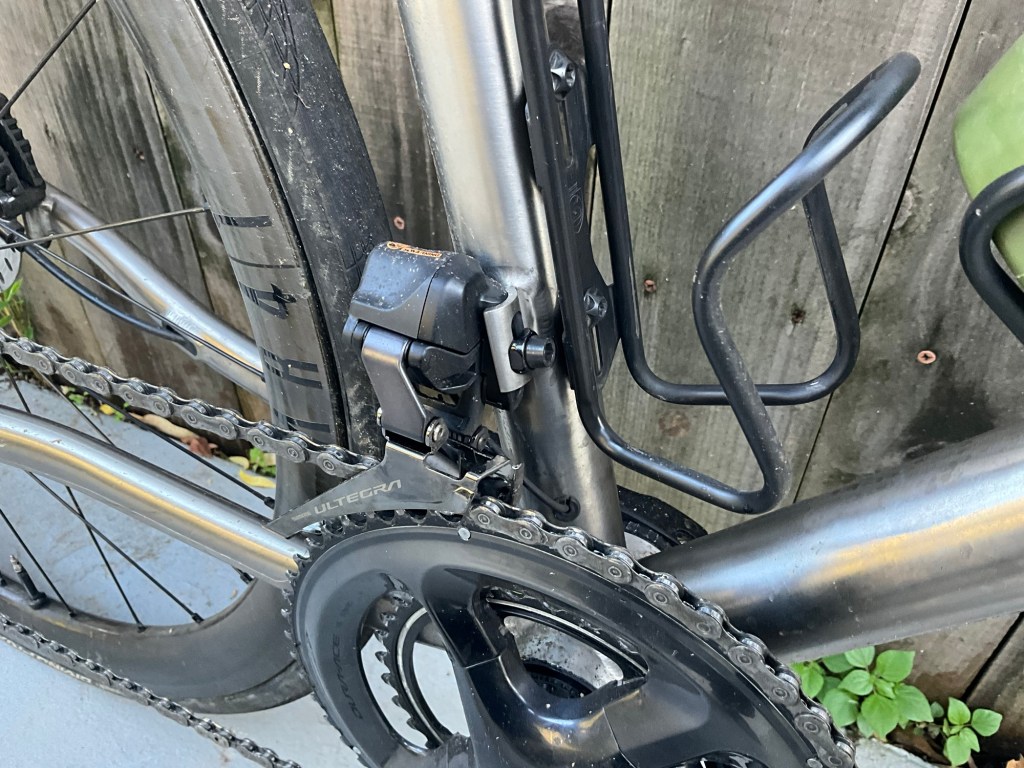
The front derailleur (FD) mount was added to this version of the frame. The first all road frame had a clamp for the front derailleur and I noticed that it got in the way of the bottle cage and rear wheel/fender. The FD mount cleans up the down tube for a cleaner look. If this bike was ever built up with a single chainring, the mount could be used to install a chain guide.
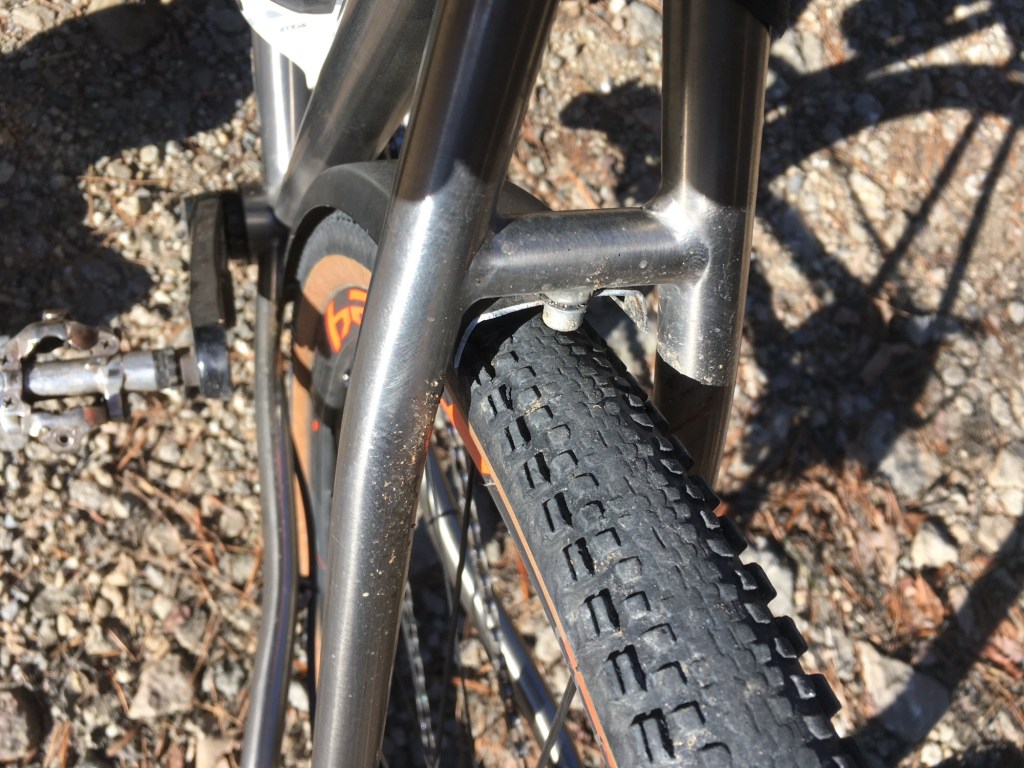
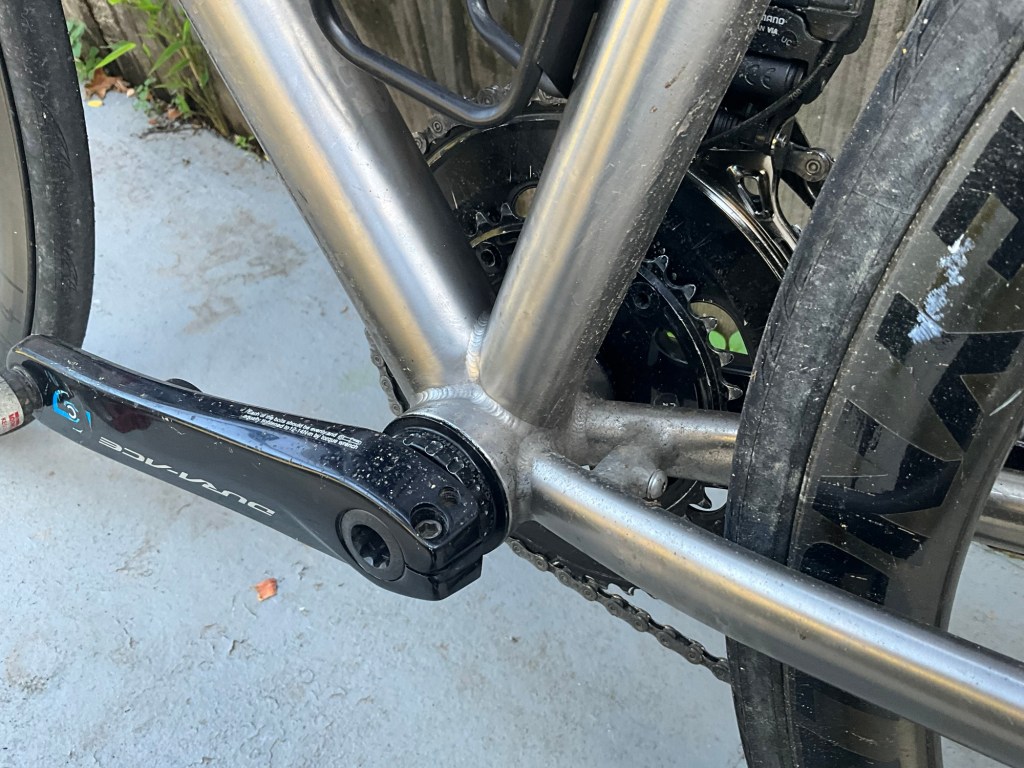
Similar to the first all road frame, this uses a threaded T47 bottom bracket. If a third iteration of this bike were to be made, I would consider a BB with bearings pressed directly into the shell for simplicity and alignment. This frame It also includes a mount in the chain stay bridge for a fender.
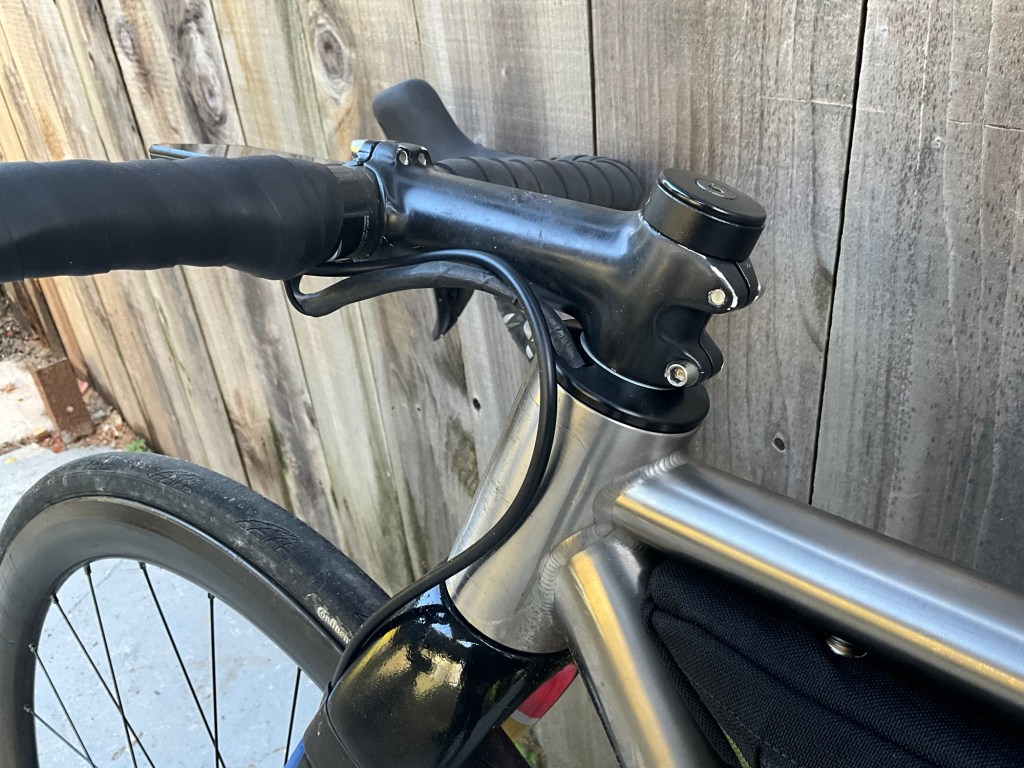
The final aluminum top cap fits the frame as designed, with all rear cables running through the head tube. One design feature this top cap severely lacks is waterproofing. There are multiple entry points where water can easily enter the head tube.
Another consideration that I would like to have on a potential third frame iteration would be a welded seat post clamp.
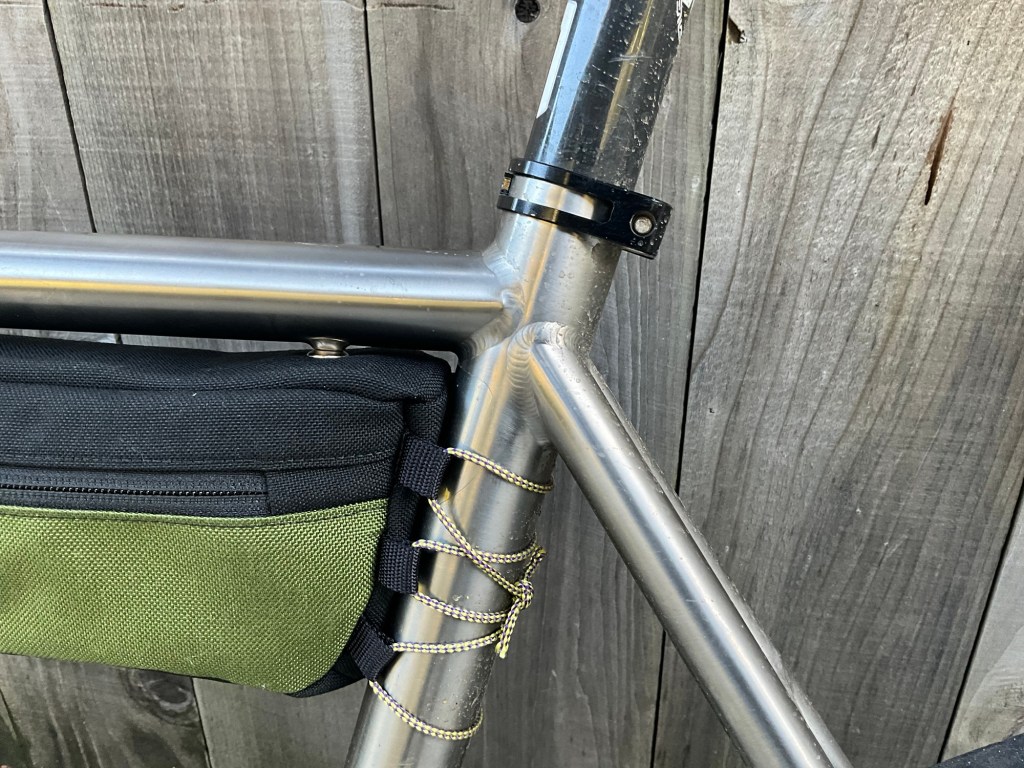
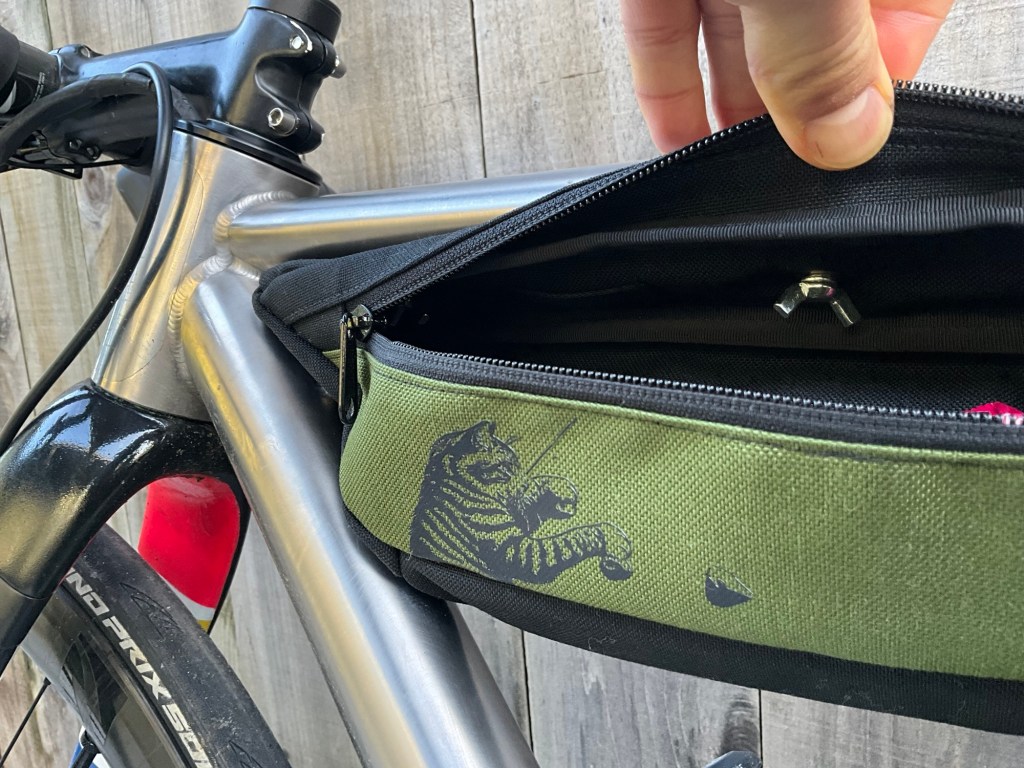
The biggest upgrade that was made to this frame was the addition of 5mm mounts on the underside of the top tube and one mount on the upper side of the down tube. A frame bag was commissioned from a good friend and local custom seamstress known as Idle Feline. This was her first bike bag, and frame bag she has made. It fits the frame triangle perfectly and includes the holes for the mounts. Wing nuts were used to secure the frame bag and to allow for easier installation and deinstallation.
For future consideration, I would like to have the mounts recessed, or filed down flush with the profile of the top tube to hide the mounts when they are not being used, and to allow the frame bag to sit more flush with the top tube.
The HB017 is a carbon fiber aero frame and fork. The lines and design of the frame and seatpost are clean; there are no awkward bends or curves. It is what one might think a straight-forward modern aero frame would be. As with other modern aero framesets, the assembly is fully integrated, meaning the cables are all hidden inside the frame and this can easily lead to assembly issues, particularly when building a non-brand bike.
With internally routed aero bikes, the cables from the levers run inside the frame as do the cables from the derailleurs. The one-piece handlebar and stem component that is compatible with the frame was purchased separately. However, it did not fit my geometry nor was it at an aesthetically pleasing angle. The angle of the stem was 6 degrees, and I was going for a zero degree stem. The aftermarket for building integrated bikes is limited. Bike companies like specialized, Willier, Cannondale, and any other commercial brands have their own designs that are not cross-compatible. There are after-market options but these are often hundreds of dollars, far more than I was willing to spend.
With the limited availability of compatible parts, I decided that the BMC integrated stem would work, as it is available in different sizes and for a reasonable price. The details of this build are described below.
The Frameset
The frameset was purchased from Aliexpress. The geometry was acceptable. The frameset included all parts, including seatpost, stem, and handlebars.
The included stem and handlebars.
Aero Cockpit
I intended to build an aero bike with the fully integrated handlebars and ordered the handlebars that were compatible with the frame.
The stem angle of these bars was higher than I wanted. Something visually unpleasing and less aero. Due to the nature of the internal routing through the headset, using a different stem is simplified if the headset hardware, including the spacers could still be reused. Fortunately, I found out the BMC stem has a similar cross section at the steerer as the existing headset. The BMC stem also has a better stem angle, 12.5 degrees. This matches the slope of the top tube which is aesthetically pleasing.
There are additional benefits of having a separate stem and handlebar: handlebar mounting accessories for round cross-sections, adjustable handlebar pitch, and the option of changing the stem. I used a generic carbon road handlebar and routed the cables from the outside of the bar, under the stem, and through the spacers, into the frame.









 Zacksunsang