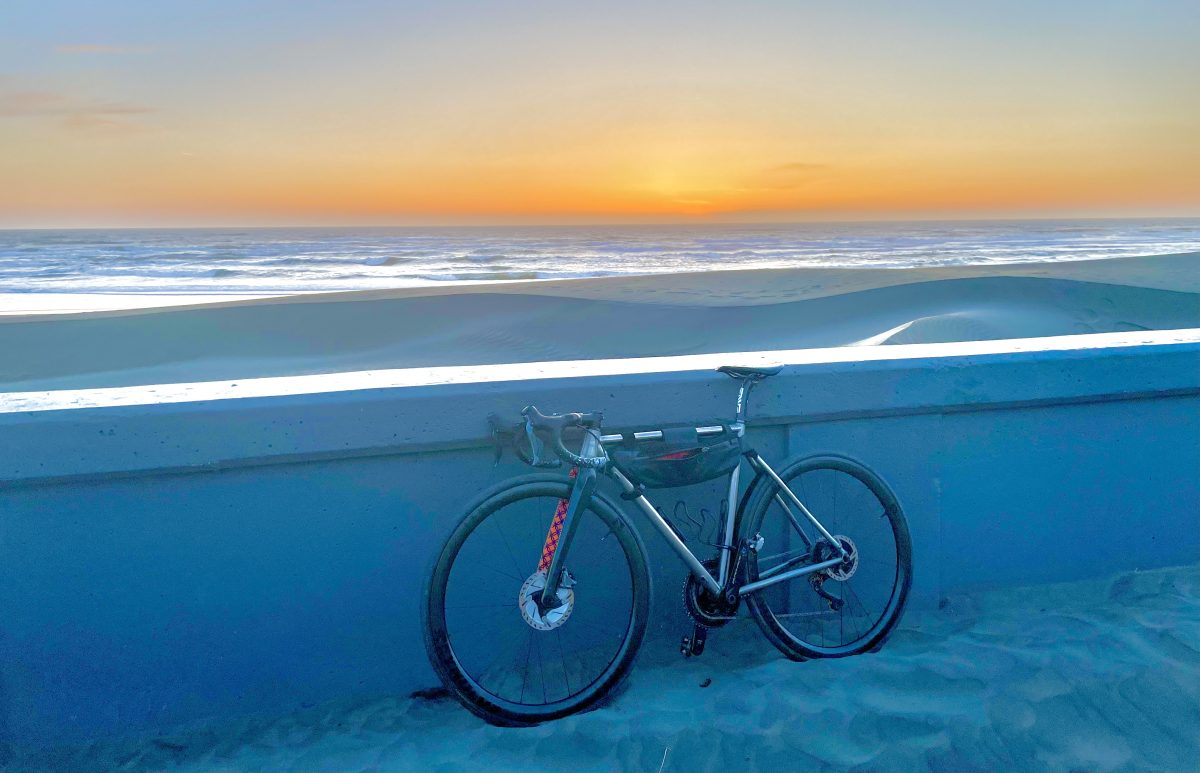

This second version of the titanium all road build has proven to be a fun, fast ride. The geometry works in such a way that I can ride comfortably and efficiently, in a more tucked aero position if I choose. One area I notice a difference in ride quality compared with the first titanium all road frame is on a climb. When riding just outside of threshold I am able to find a springy rhythm that allows me to keep the pedals turning. The bike also feels very nimble and secure when riding out of the saddle. The front end feels light when sweeping back and forth, responsive, and stiff enough to translate my energy into the forward direction. All of this positive feedback is also noticed when riding on flats but to a lesser degree.

The frame saw some changes compared with the first titanium all road frame, highlighted on the diagram. Some changes that are not highlighted include straight seat stays, a front derailleur mount, and a head tube to accommodate internal routing.
The geometry was adjusted based on my experience with the first all road frame. The top tube was extended and the seat and head tube angles were tightened up. These angle adjustments seemed to pair very well with the enve CX fork that was used.
The frame saw some stiffness upgrades in the form of a larger diameter down tube and a thicker bottom bracket shell.
Lastly, with the bottle cage lowered for easier frame bag access and more tire clearance, this frame leaves little to be desired.
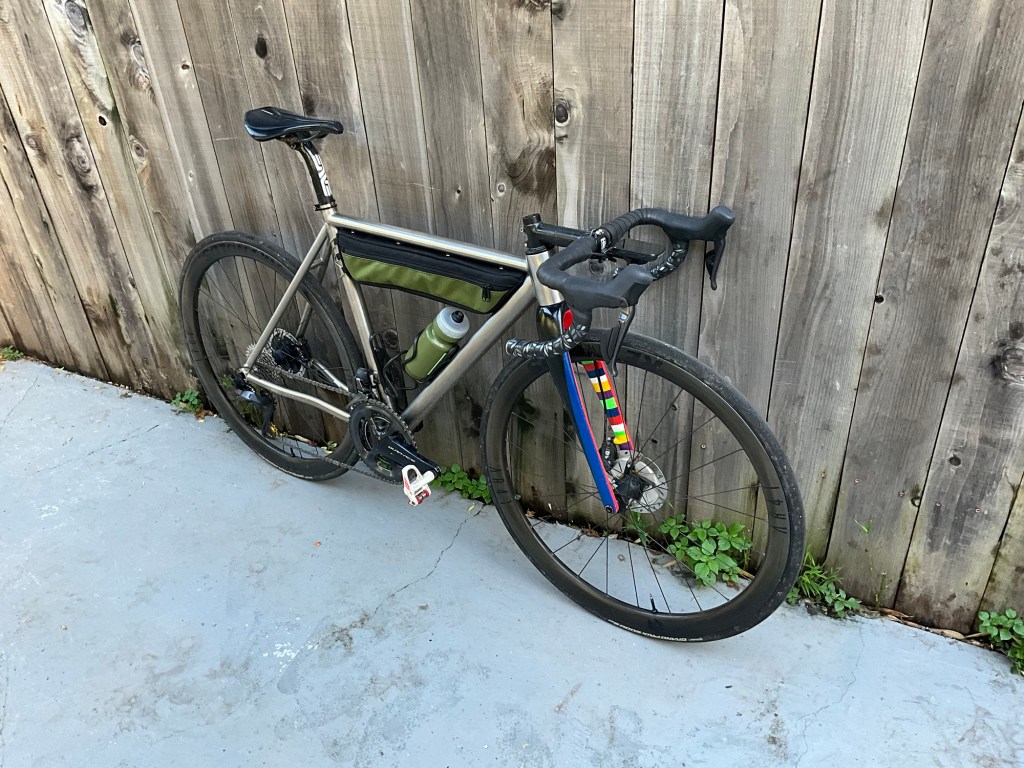
The fork was hand painted, one stripe at a time, in a traditional Korean color scheme called saekdong (색동). This vibrant color pattern is historically associated with cheerful youth who would wear these colors on their traditional hanboks (한복) on special occasions such as lunar new year and thanksgiving (추석). Through the Japanese occupation it also became associated with human rights. Today it is associated with festive Korean events and can be seen in many different versions and forms.

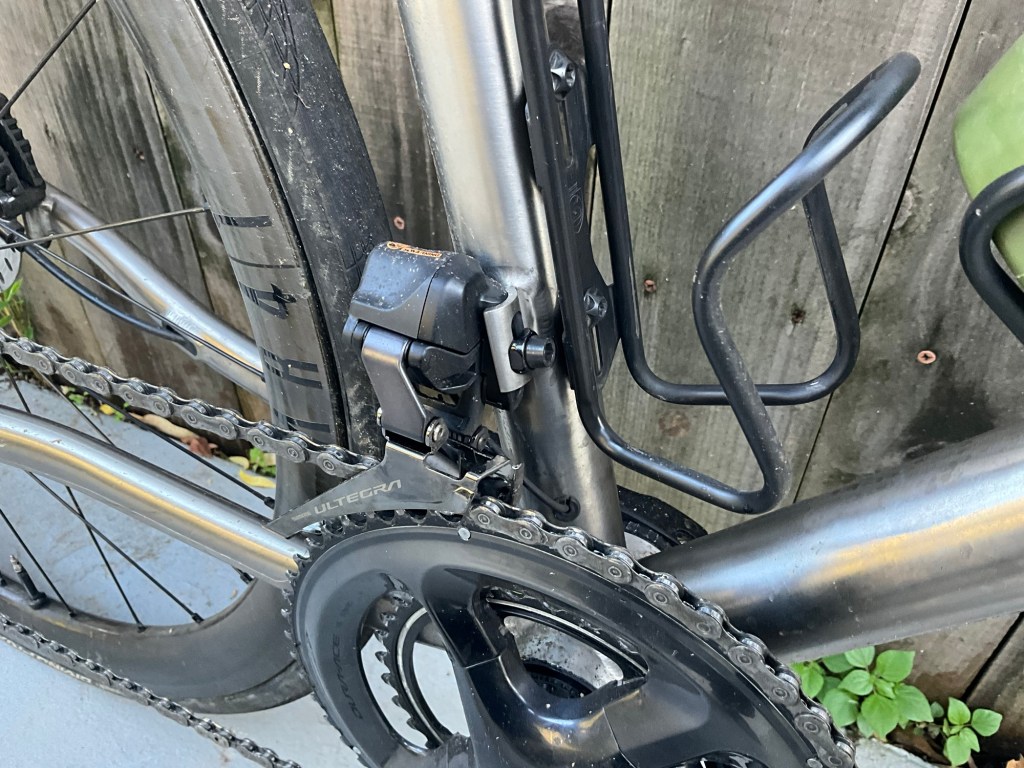
Another upgrade for this build was the new Di2 12 speed Ultegra Group. This version allows for semi-wireless shifting, where the levers do not need to be connected directly to the derailleurs. However, in the hopes of extending the battery life, the shifters were wired directly to the derailleurs.
I had intended on having the wire port on the underside of the chain stay and was amiss when it was on the top. However, its current placement does make for a more natural wire routing curvature.

The rear drop out design has a separate plate that is secured over the thru axle nut. This keeps the thru axle nut attached to the frame making it easier when removing the rear wheel.
Similar to the first version of the all road frame, this frame also has mounts welded to the seat stays.

The front derailleur (FD) mount was added to this version of the frame. The first all road frame had a clamp for the front derailleur and I noticed that it got in the way of the bottle cage and rear wheel/fender. The FD mount cleans up the down tube for a cleaner look. If this bike was ever built up with a single chainring, the mount could be used to install a chain guide.
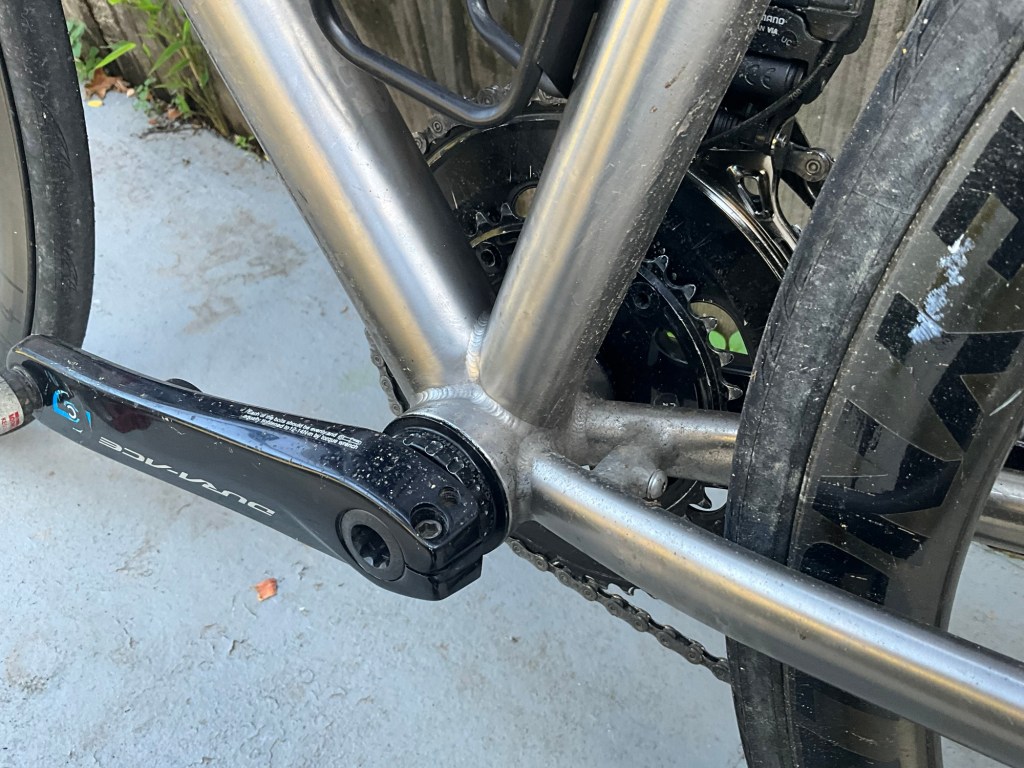
Similar to the first all road frame, this uses a threaded T47 bottom bracket. If a third iteration of this bike were to be made, I would consider a BB with bearings pressed directly into the shell for simplicity and alignment. This frame It also includes a mount in the chain stay bridge for a fender.
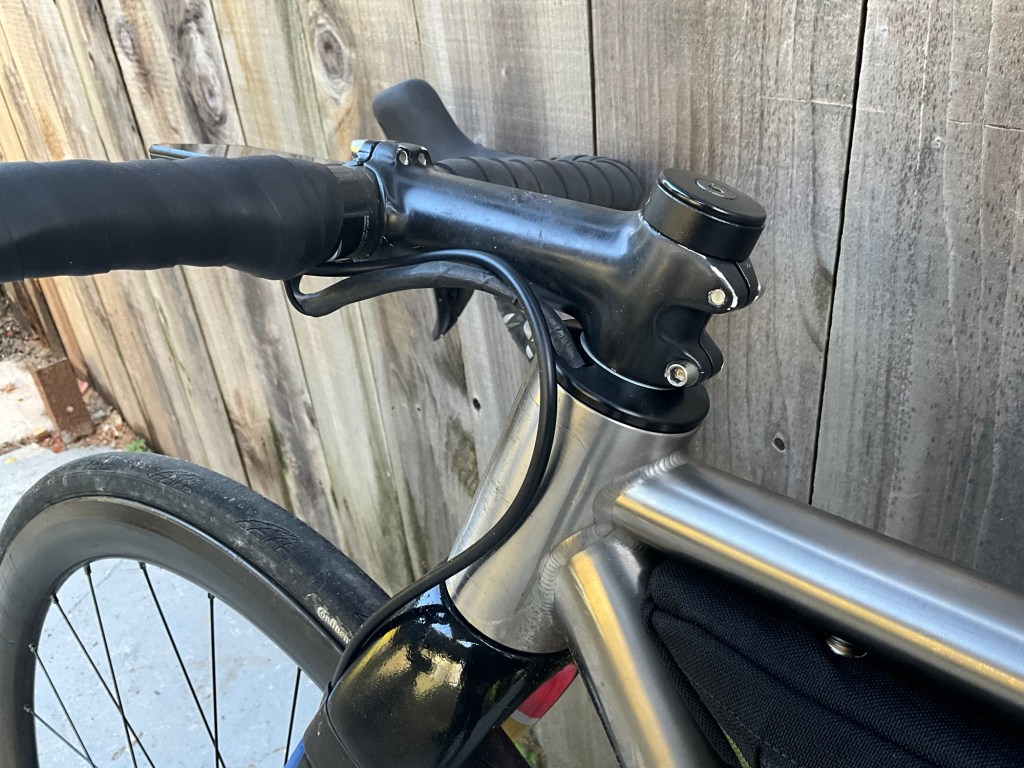
The final aluminum top cap fits the frame as designed, with all rear cables running through the head tube. One design feature this top cap severely lacks is waterproofing. There are multiple entry points where water can easily enter the head tube.
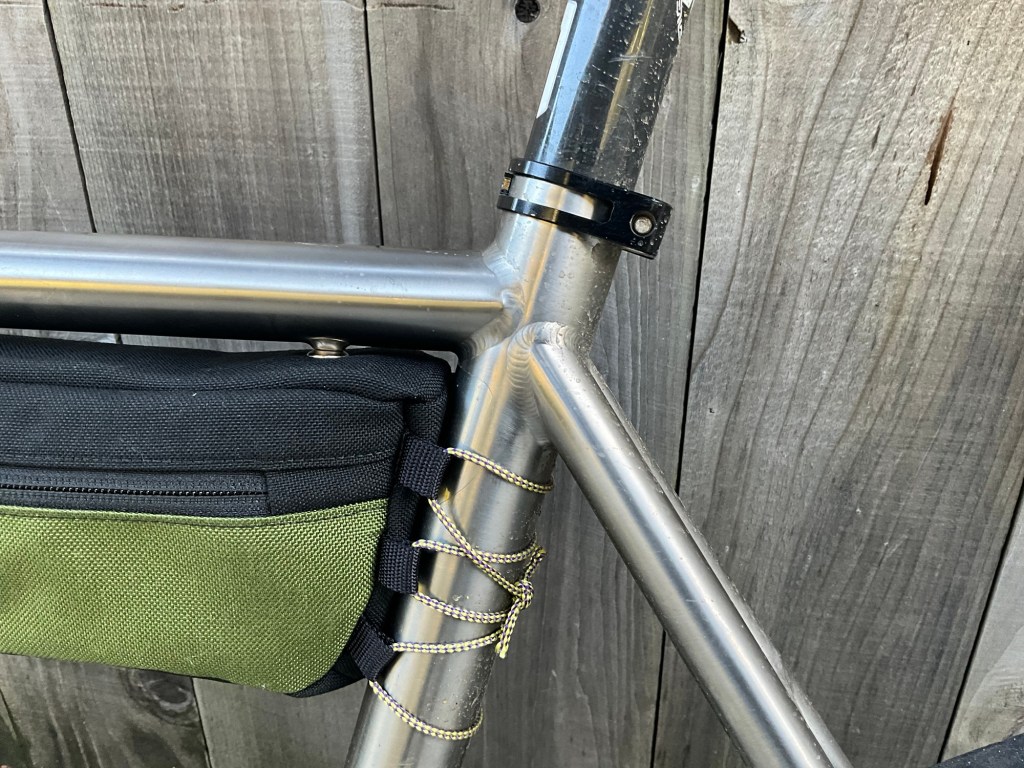
Another consideration that I would like to have on a potential third frame iteration would be a welded seat post clamp.
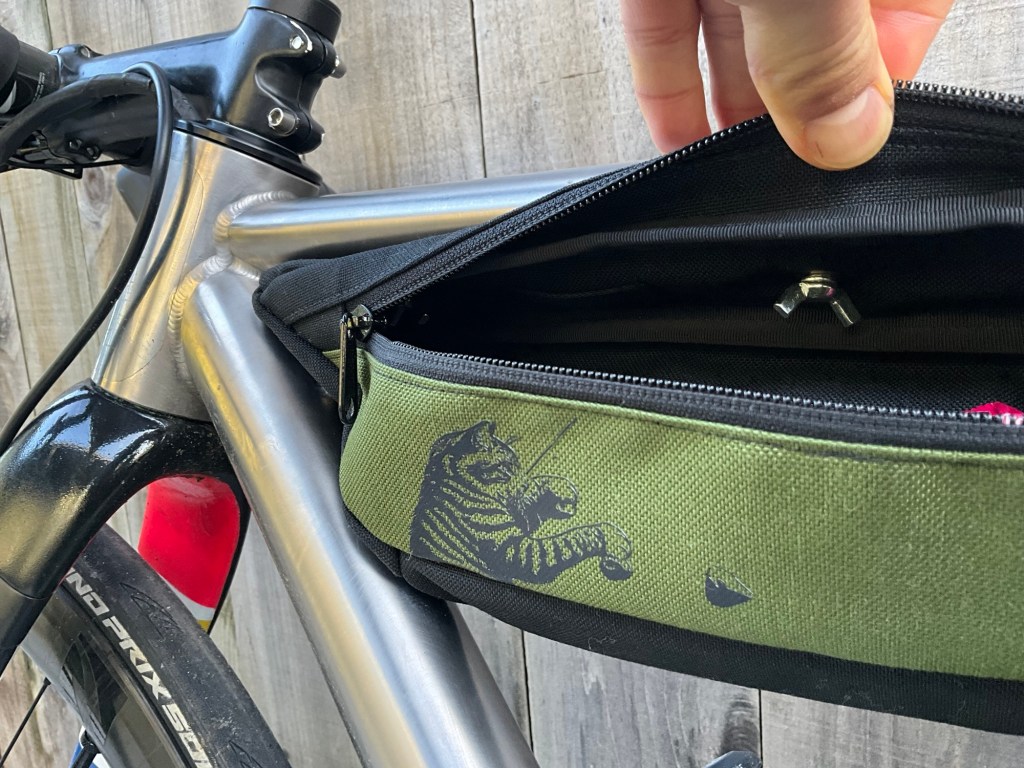
The biggest upgrade that was made to this frame was the addition of 5mm mounts on the underside of the top tube and one mount on the upper side of the down tube. A frame bag was commissioned from a good friend and local custom seamstress known as Idle Feline. This was her first bike bag, and frame bag she has made. It fits the frame triangle perfectly and includes the holes for the mounts. Wing nuts were used to secure the frame bag and to allow for easier installation and deinstallation.
For future consideration, I would like to have the mounts recessed, or filed down flush with the profile of the top tube to hide the mounts when they are not being used, and to allow the frame bag to sit more flush with the top tube.
 Zacksunsang